Home Energy Reports and Behavior-Based Energy Efficiency: Driving Savings in a Changing Energy Landscape - Free CEU Webinar
Behavior-based energy efficiency programs, including home energy reports, have long helped utilities deliver energy savings. But as priorities shift toward cutting climate pollution, reducing grid strain, and supporting home electrification, these programs are evolving. Join us for a webinar exploring a new report detailing how behavior-based programs are adapting to meet today’s energy challenges while continuing to deliver results. We’ll share key insights on what’s working, where there’s room to grow, and emerging behavior-based energy efficiency programs that utilities can adopt to drive even more savings and benefits.
Household Adaptive Strategies: Navigating Tradeoffs Between Comfort, Cost, and Outage Response - Free CEU Webinar
This paper presents findings from a novel comparative analysis examining how measured, quantitative changes to thermostat settings relate to the household experience of indoor comfort, as reported by occupants. Our case study included a sample of 51 Michigan households, from whom we collected smart thermostat setpoint data and interviewed heads of household to explore their motivations and methods for controlling their indoor environment. We analyzed the interview data and found that common reasons for participant thermostat interaction included serving the needs of individuals with health conditions, compromising multiple people’s preferences, compensating for spatial temperature discrepancies, managing energy costs and/or energy use, and maintaining reliable utility service.
DIY Manual D Duct Design Simulations for better HVAC performance - Free CEU Webinar
This course covers the calculations, procedures, and documentation required to complete an ACCA Manual D duct design. Participants will learn how to calculate friction rate, determine total equivalent length, size ducts using the velocity method, and properly balance supply and return air systems. The course will also explain how duct fittings, static pressure, and equipment airflow affect overall system performance, comfort, efficiency, and noise levels. Attendees will gain a practical understanding of how to translate Manual J and Manual S results into a complete duct design that delivers the required airflow to each room.
Equinox House Upgrade Tour: Rainwater | Solar | Smart Ventilation - Free CE Webinar
Join us for an enlightening virtual tour of Equinox House, a remarkable net zero home located in Urbana, Illinois, built in 2010. During the tour, you'll discover the innovative features that make this house a standout example of sustainable living. Learn about the advanced indoor air quality management system, which includes a conditioning energy recovery ventilator that effectively monitors indoor CO2 levels, as well as indoor and outdoor VOCs and particulates. One of the highlights is the home's rainwater harvesting system, which was the first of its kind approved in Illinois for non-potable use—supplying 50% of the home's annual water needs for toilets and garden use. You’ll also see the beautiful raingarden that holds 3,000 gallons of rain overflow, designed to reduce stormwater drainage and support the native prairie landscape that surrounds the property. As we explore further, you’ll learn how the home is powered by an 8.5kW solar array installed in 2010, and how a second 8.5kW array, along with 32kWh of battery storage and an automatic transfer switch, was added in 2026. This upgrade not only provides energy for the home’s two electric vehicles but also minimizes reliance on the utility grid while ensuring backup power during outages. This tour promises to be a fascinating glimpse into the future of sustainable living—don’t miss it!
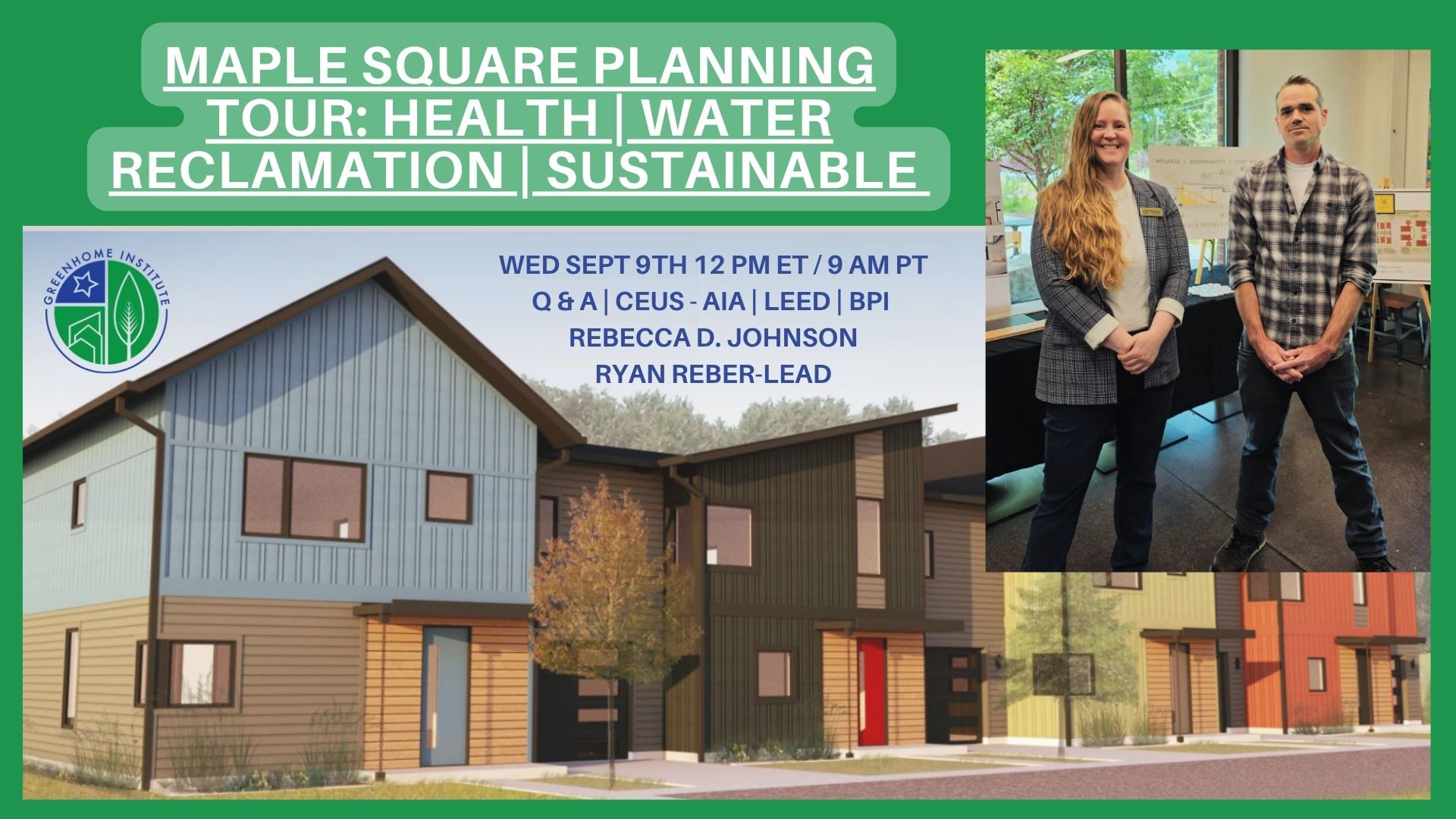
Maple Square Planning CE Tour: Health | Water Reclamation | Sustainable
This course will walk you through the sustainability goals of the Maple Square pocket neighborhood being developed in Bloomington, IL. We will be discussing topics like Passive House principles, high performance goals, air quality with CERV, and our water reclamation system. Maple Square is a first of it's kind development; incorporating a large variety of sustainable features for wellness focused living for people and the planet. Our goal is to inspire you to think about the importance of incorporating a variety of features into the home building and neighborhood designs. You will also gain special insight on water reclamation in new home construction. This course will reach a wide range of audience members from beginning learners to those with experience in the sustainability fields of architecture and/or development.
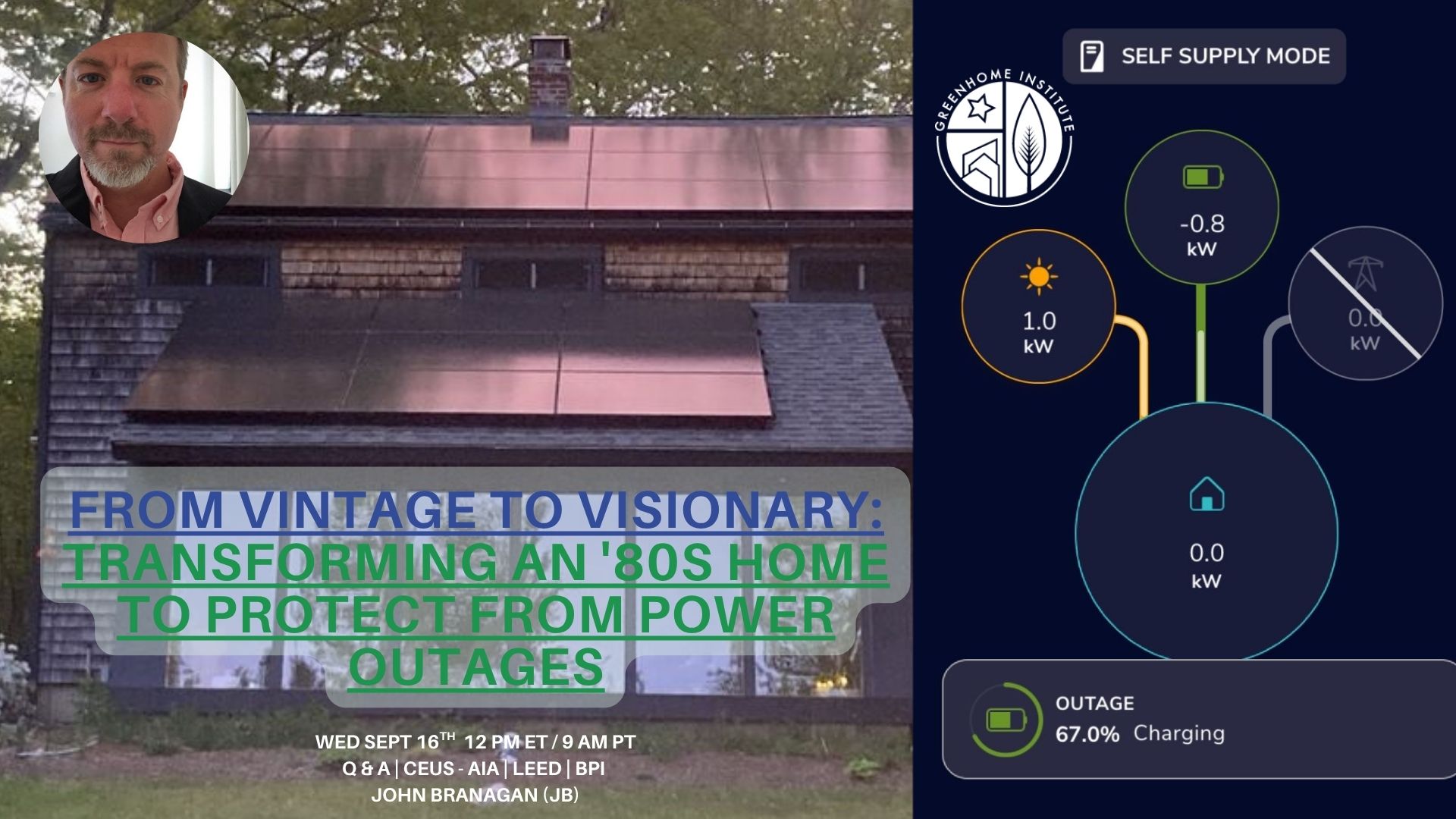
From Vintage to Visionary: Transforming an '80s Home to Protect from Power Outages
John Branagan JB will discuss the steps he has taken to update his '80s post-and-beam home to an efficient dwelling, incorporating Solar + Storage + beneficial electrification and intelligent load management. He will touch on the journey from early Solar thermal domestic hot water to insulation to its current state. He will discuss the technology he is currently using and share the real-world benefits and challenges he's faced along the way.
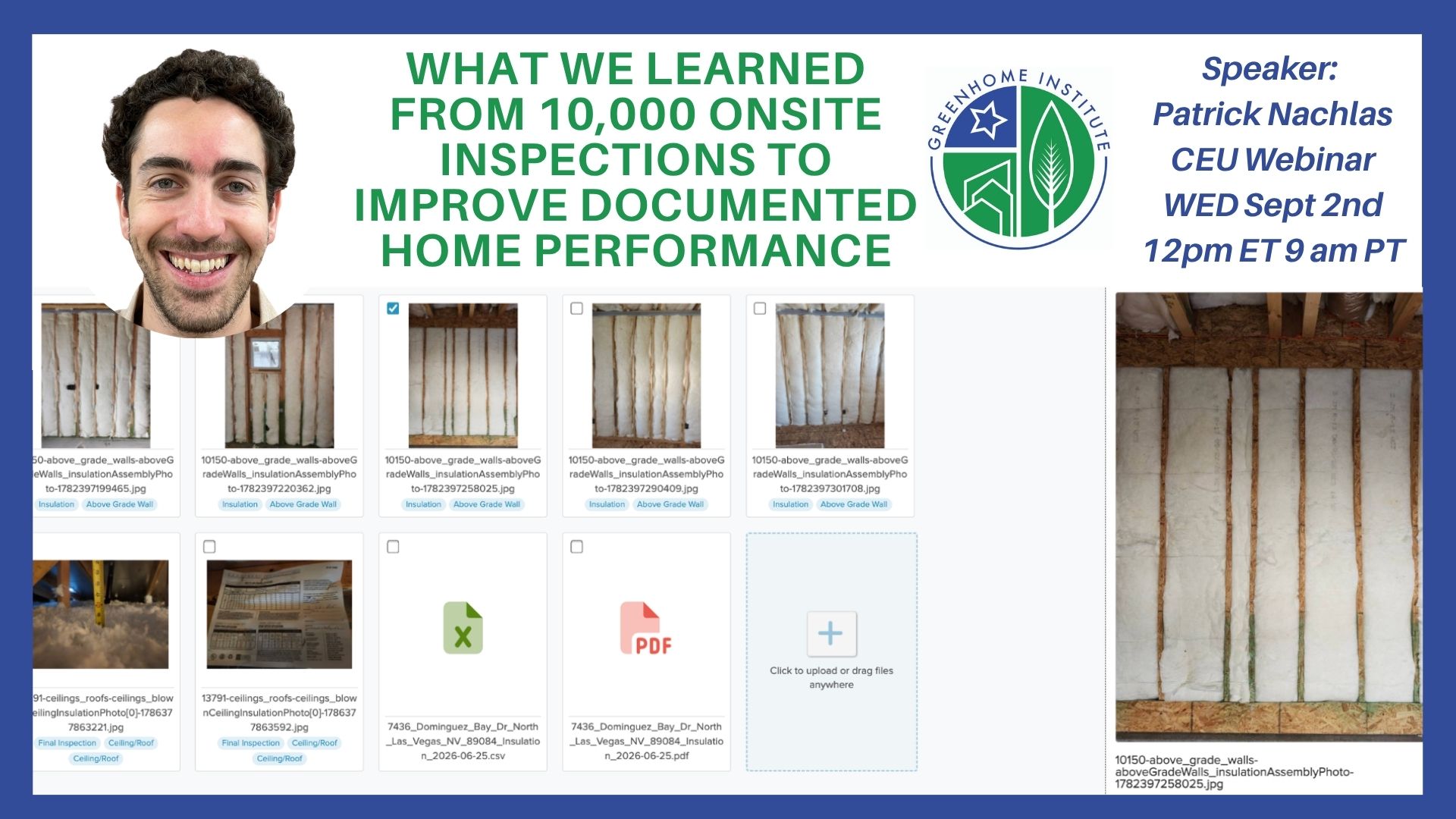
What we learned from 10,000 onsite inspections to improve documented home performance - Free CEU Webinar
Whether you are pursuing green building certification, trying to comply with code, or want to have a good paper trail, onsite inspections with photo documentation are key to telling a story about home performance or lack thereof and ensuring good documentation and verification. We will review lessons learned from 10,000 Ekotrope ONSITE inspections through the lens of energy rating index verification and discuss what you need to know!
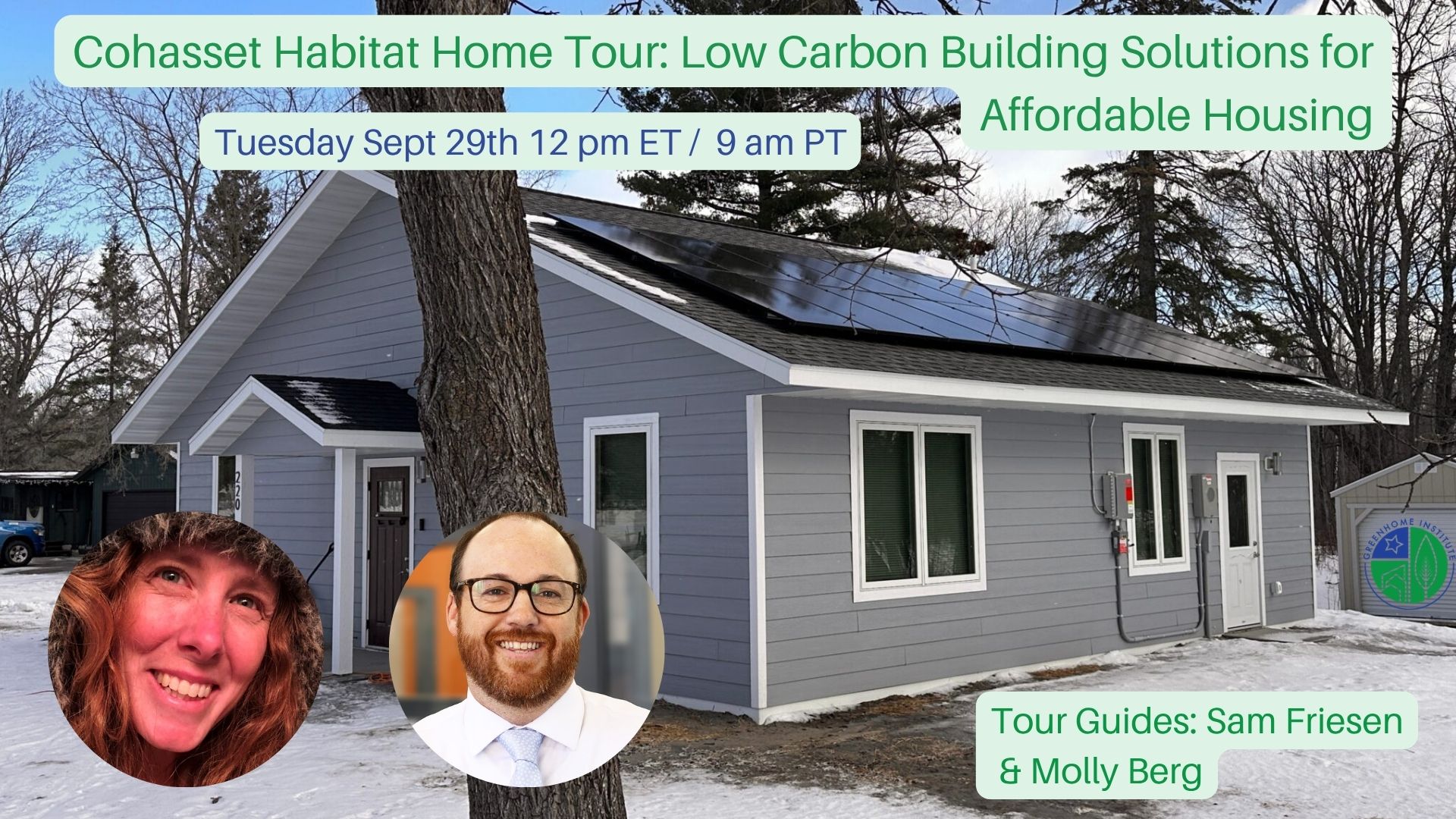
Cohasset Habitat Home Tour: Low Carbon Building Solutions for Affordable Housing
Experience a new standard in sustainable homebuilding as you tour this innovative northern Minnesota home, a model of affordability, resilience, and health. Developed in partnership with Habitat for Humanity, this house showcases a “building recipe” that combines thick, super-insulated walls, locally sourced air-dried lumber, all-electric appliances, and a heat pump energy recovery ventilation system. Together, these features create a home that uses far less energy, stays comfortable even in the harshest winters, and costs less to operate—proving that sustainable, high-performance homes can be built affordably for families across Minnesota.
There is a vast difference in experience between a real estate agent/Realtor and one educated in sustainability, energy efficiency, and building science. Finding the right Realtor and understanding their value proposition makes a key difference in marketing, selling, and getting value for green features in an appraisal. Listing agents are the gatekeepers of information, so having as much data as possible is key to providing that value on the new Appraisal UAD 3.6 software. Key talking points with clients may start well before they sell their homes. It's important to know which features the public seeks and is willing to pay extra for in the buying process.
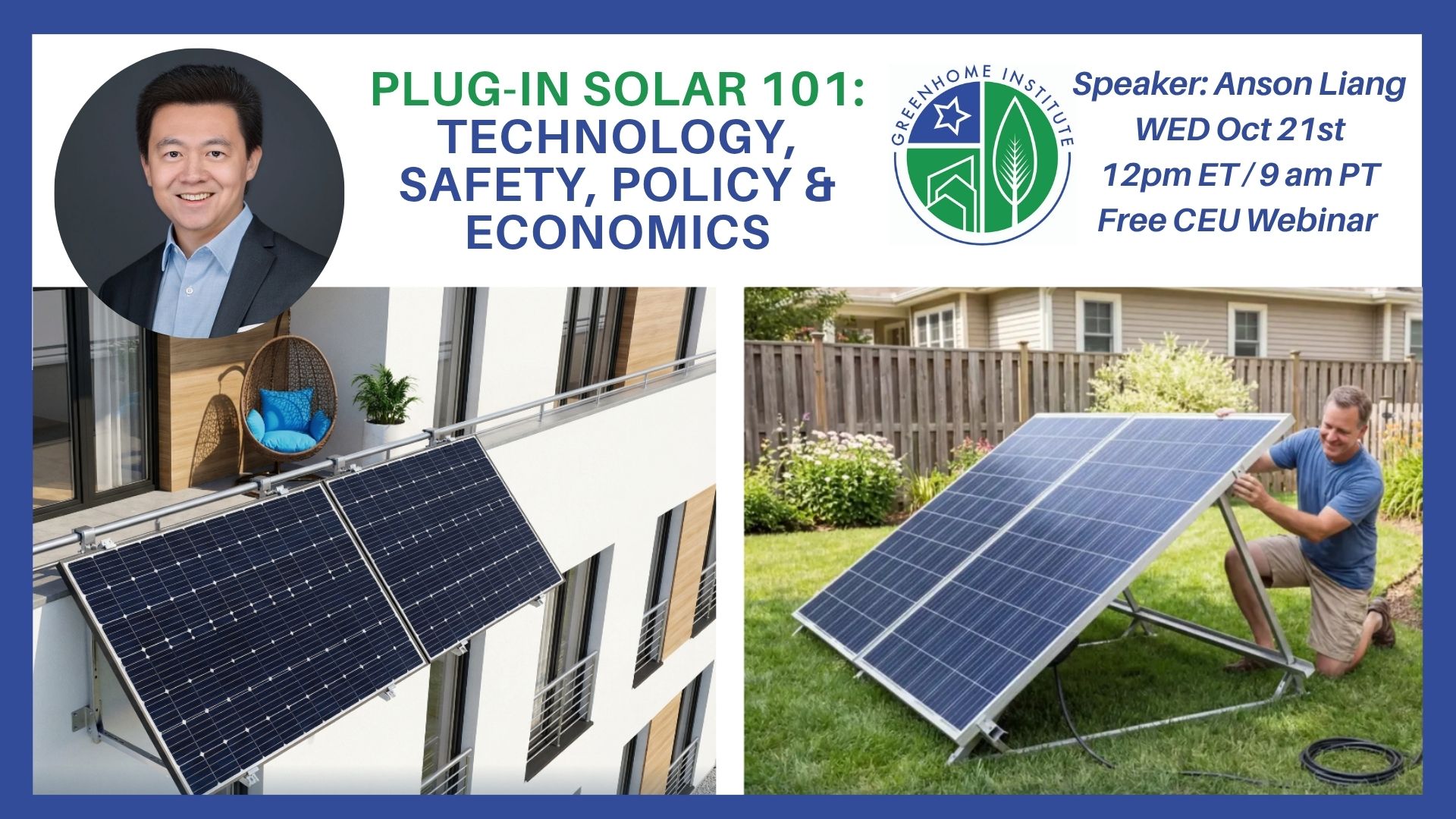
Plug-in solar is emerging as a new category of distributed energy in the United States, offering a simpler pathway for households to generate electricity using small photovoltaic systems designed for connection to residential electrical systems without the complexity of a traditional rooftop solar installation. This introductory webinar will explain how plug-in solar systems work, the major system components and safety features, the emerging role of standards such as UL 3700 and nationally recognized testing laboratory certification, and the rapidly evolving state regulatory landscape. The presenters will examine how states are approaching system-size limits, utility interconnection, permitting, registration, installation, and consumer protections, as well as the economics and resilience benefits of small-scale solar. The course will also place plug-in solar within the broader distributed-energy landscape and explain how requirements change as systems grow from small plug-in devices to whole-home and larger distributed energy systems.
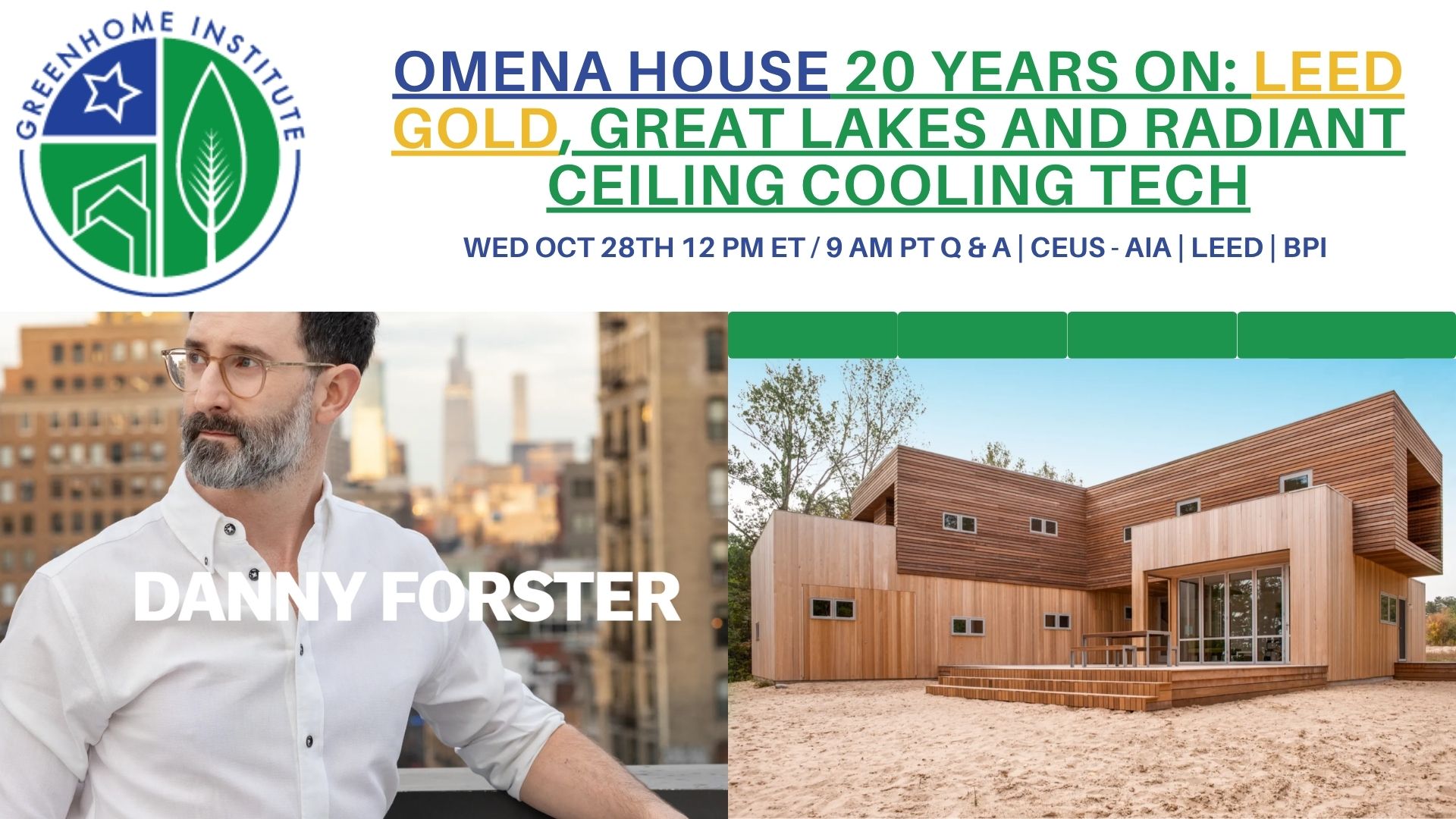
Omena House 20 Years On: LEED Gold, Great Lakes and Radiant Ceiling Cooling Tech - Free CEU Webinar Tour
Details to view the event are private and will be sent along with your ticket purchase. "This virtual Zoom lecture will explore the Omena House, designed by DF&A in 2007, which achieved LEED Gold certification. The discussion will examine the home's strategic architectural design and its thoughtful integration with the Great Lake landscape on which it is situated. We will explore the house's original design, current performance, and unique radiant ceiling system, which provides cooling without the use of forced air. The lecture will also consider potential opportunities for future additions, upgrades, and performance improvements to the home." This home will be officially added to the ongoing GHI ASES National Solar Tour Map
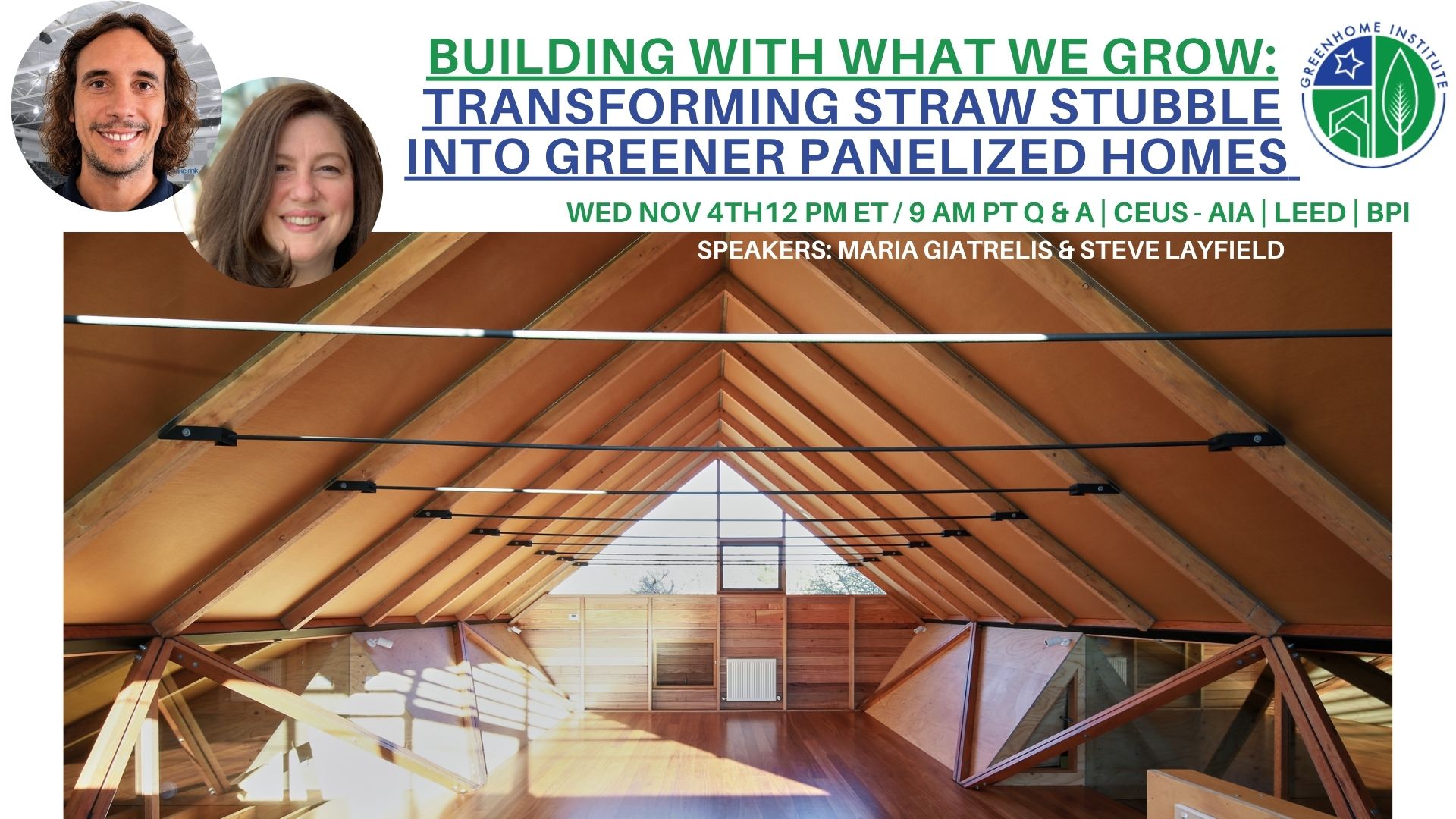
Building With What We Grow: Transforming Straw Stubble into Greener Panelized Homes - Free CEU Webinar
What if one of the building materials of the future is something we already grow? Join us as we explore how agricultural by-products and other bio-based materials can help address some of construction’s most pressing challenges: from embodied carbon and material waste to occupant health and the need for buildings that can adapt and last longer. The first half of the webinar examines the broader shift toward lower-carbon construction, including the potential to transform agricultural residues such as straw into durable building materials. We’ll explore how material choices can influence carbon, waste, indoor environmental quality, and building performance; how adaptable and demountable systems can extend the useful life of buildings and materials; and what innovative projects such as LTL Architects’ All Straw House can teach us about the opportunities and challenges of building with what we already grow. The second half turns these ideas into a real-world building system with an introduction to Durra Panel, a bio-based wall and ceiling system manufactured from reclaimed straw stubble. Attendees will learn how Durra Panel is made, explore its environmental and material health attributes, review key performance considerations including fire, acoustics, thermal and moisture behavior, durability, and impact resistance, and see how the system has been applied in completed projects. Connect the bigger picture of low-carbon, bio-based construction with a practical example of how agricultural residues can move from the field into healthier, more sustainable buildings.
2026 Midwest Building Codes & Policy Summit - GHI Member Discount
We’re excited to partner with the Midwest Energy Efficiency Alliance (MEEA) for the 2026 Midwest Building Codes & Policy Summit, taking place October 14-15 in Chicago, IL and GHI Members will receive 10% off the price. The Summit brings together building professionals, policymakers, utilities, advocates, and other industry leaders from across the Midwest to explore the latest developments in building codes and policy. This year’s agenda features timely conversations on topics ranging from municipal decarbonization strategies and existing building solutions to energy code compliance, tribal sovereignty, and more. Whether you’re looking to learn from regional experts, connect with peers, or stay up to date on the policies and practices shaping more efficient buildings, there’s something for you at the Summit. Explore the agenda and learn more about the 2026 Midwest Building Codes & Policy Summit: https://www.mwalliance.org/events/midwest-building-codes-policy-summit and sign up to be a GHI member to get the discount https://greenhomeinstitute.org/becomeamember/
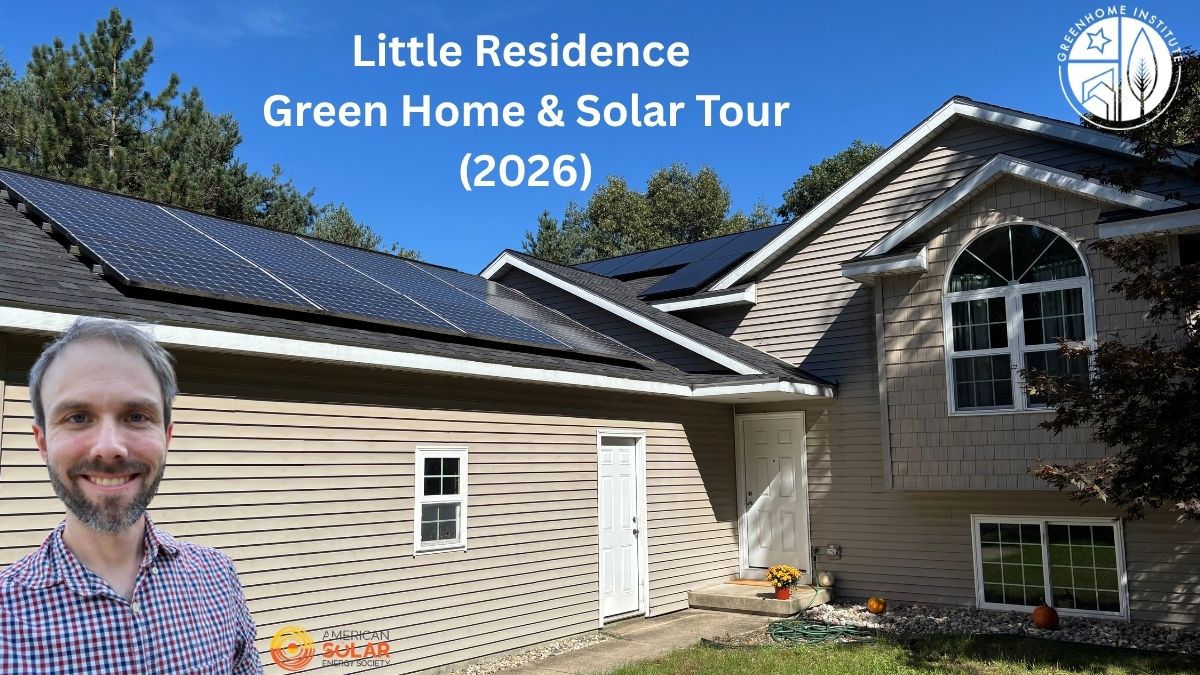
Little Residence Green Home & Solar Tour 2026 Update - Free CEUS
Join Brett Little, Education Manager at the GreenHome Institute, as he invites you to his home (virtually) for a 2026 update on the American Solar Engineering Society National Solar Tour. Discover how he transformed a 2002-built residence into an all-electric, solar-powered home, achieving a DOE Home Energy Score of 10, PEARL Platinum Certification, and the ultimate holistic approach using the GreenStar Homes Certification. This tour will guide you through transforming a traditional home into a sustainable showcase, covering every step from initial green inspections to upgrading heating, cooling, ventilation, appliances, plumbing, and more—all while maximizing comfort, safety, and utility cost savings. 2026 updates include a new roof, additional solar, new Energy Star doors, and a discussion of HVAC static pressure testing results. See firsthand how challenges like air quality, water conservation, and appliance upgrades were tackled, and get tips on leveraging financial incentives and green financing options for your own project. Whether you’re a homeowner, renter, or housing professional, this webinar is packed with actionable insights to help you or your clients achieve similar green home results. Don’t miss this chance to ask questions and see what’s possible on the path to sustainable living!
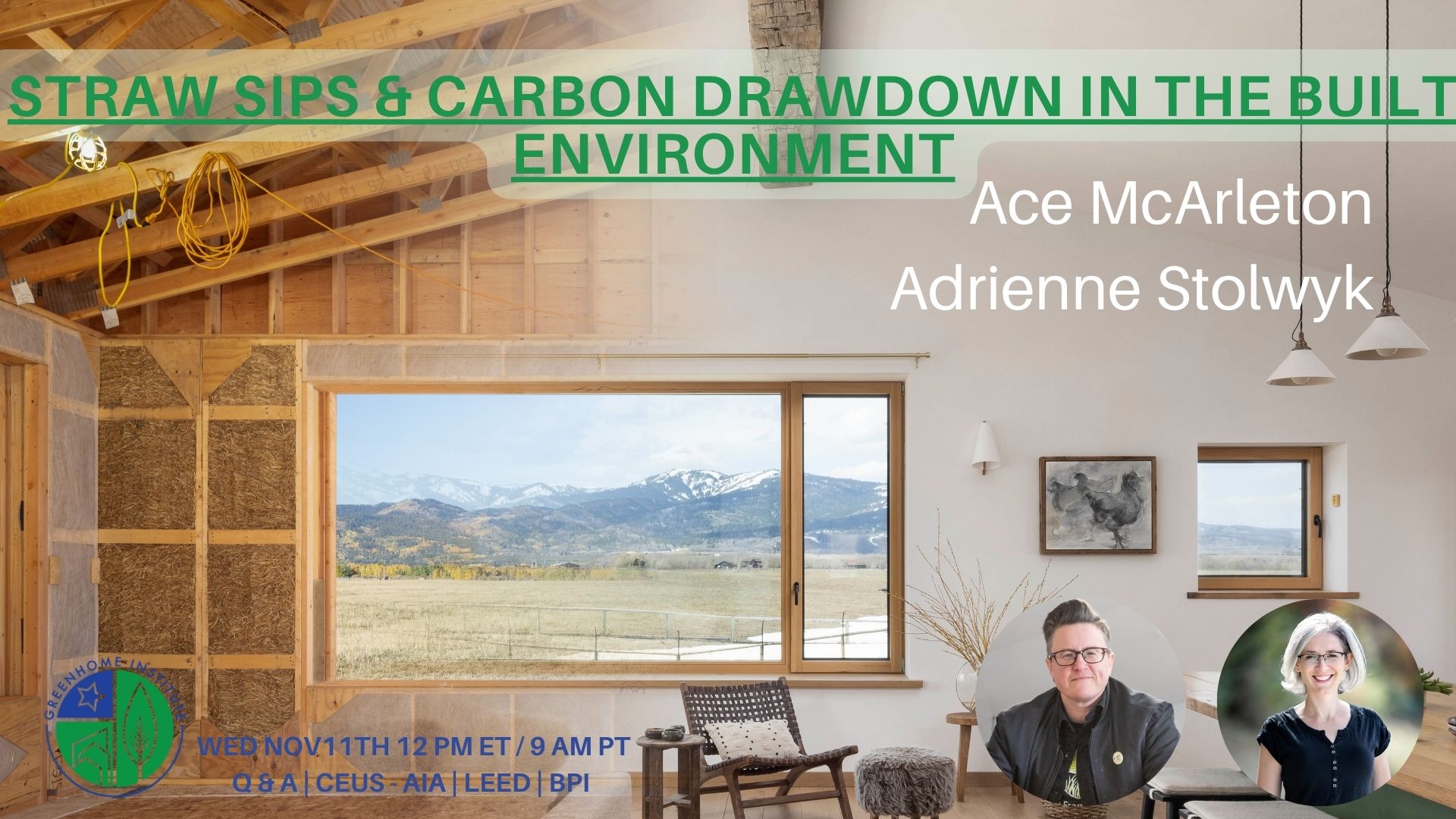
Straw SIPS & Carbon Drawdown in the Built Environment - Free CEU Webinar
Building with straw is an excellent option for projects looking to not only minimize embodied carbon emissions, but maximize positive climate impacts through carbon drawdown and storage. Straw SIPs, or pre-fabricated straw panels, are a proven and practical method for any type of project: commercial, residential, or institutional. Rapidly scaling our positive climate impact in our industry is paramount, and both speakers are not only implementing this construction solution in their respective companies, but building an innovative, collaborative business practice called the Seed Collaborative that scales this climate solution across the US. This session will review the mechanisms of carbon drawdown and storage in bio-based materials like straw; explain the practice of specifying and installing S-SIPs into projects; and present the business structure of the Seed Collaborative as an example for rapid scaling climate solutions.
Straw SIPS & Carbon Drawdown in the Built Environment - Free CEU webinar
Building with straw is an excellent option for projects looking to not only minimize embodied carbon emissions, but maximize positive climate impacts through carbon drawdown and storage. Straw SIPs, or pre-fabricated straw panels, are a proven and practical method for any type of project: commercial, residential, or institutional. Rapidly scaling our positive climate impact in our industry is paramount, and both speakers are not only implementing this construction solution in their respective companies, but building an innovative, collaborative business practice called the Seed Collaborative that scales this climate solution across the US. This session will review the mechanisms of carbon drawdown and storage in bio-based materials like straw; explain the practice of specifying and installing S-SIPs into projects; and present the business structure of the Seed Collaborative as an example for rapid scaling climate solutions.
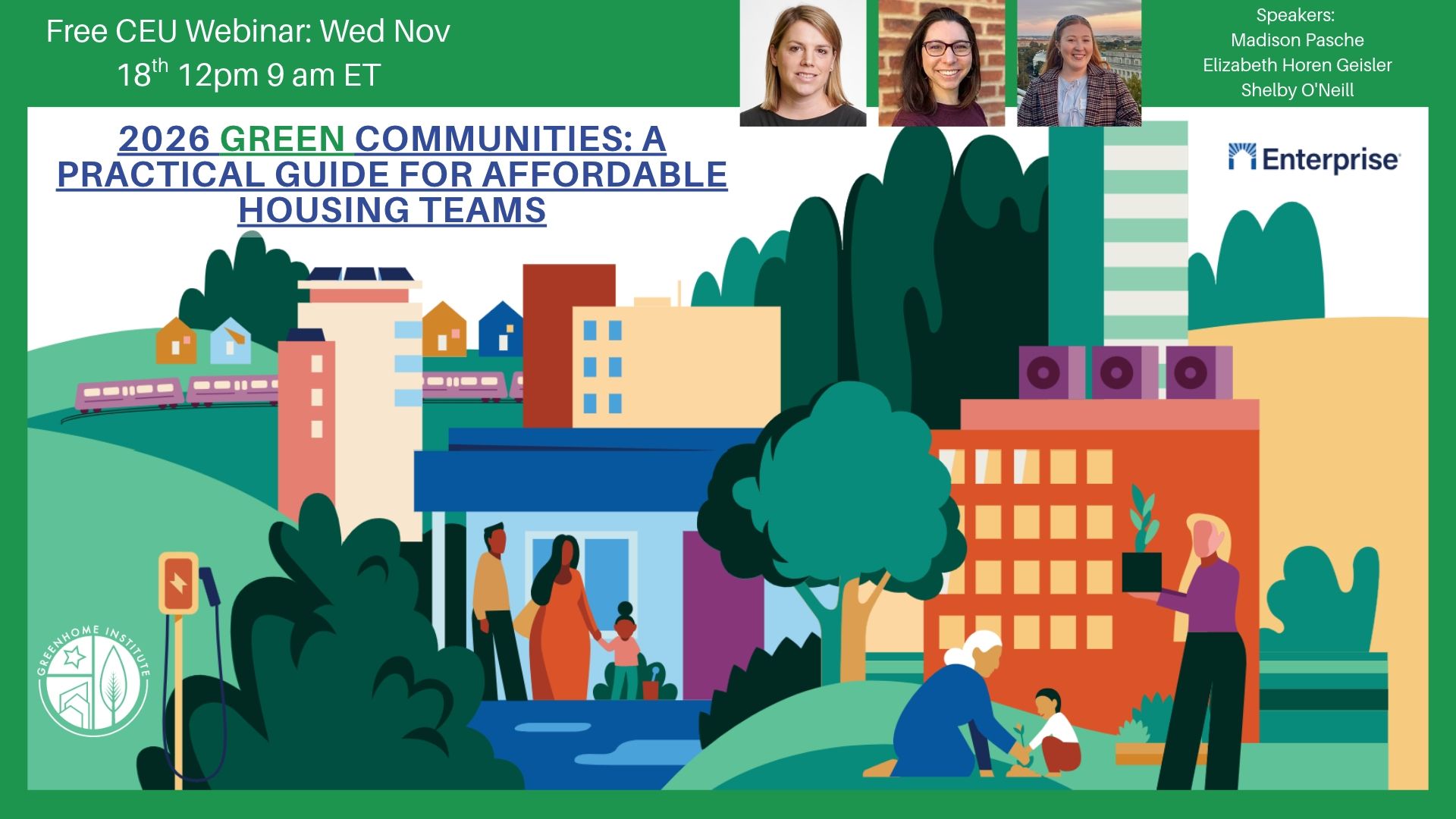
2026 Green Communities: A Practical Guide for Affordable Housing Teams - Free CEU Webinar
Whether you're pursuing Green Communities certification for the first time or transitioning from previous versions of the standard, this introductory webinar will help you navigate the 2026 Enterprise Green Communities Criteria with confidence. Participants will receive an overview of the program's three core themes—health, energy, and resilience—explore key updates across the eight criteria categories, and learn how the certification process works from prebuild through postbuild review. Presenters will highlight what has changed, what remains familiar, and the tools and resources available to help affordable housing teams successfully certify projects under the 2026 Criteria.
Residential Building Code Resilience and Affordability - Free CE Webinar
This course, based on a recent study, examines how state-level adoption of newer editions of the International Residential Code—codes designed to reduce losses from natural hazards, improve life safety, and enhance community resilience—is associated with changes in home sale prices and housing supply. It helps dispel the myth that codes automatically drive up housing prices as well.
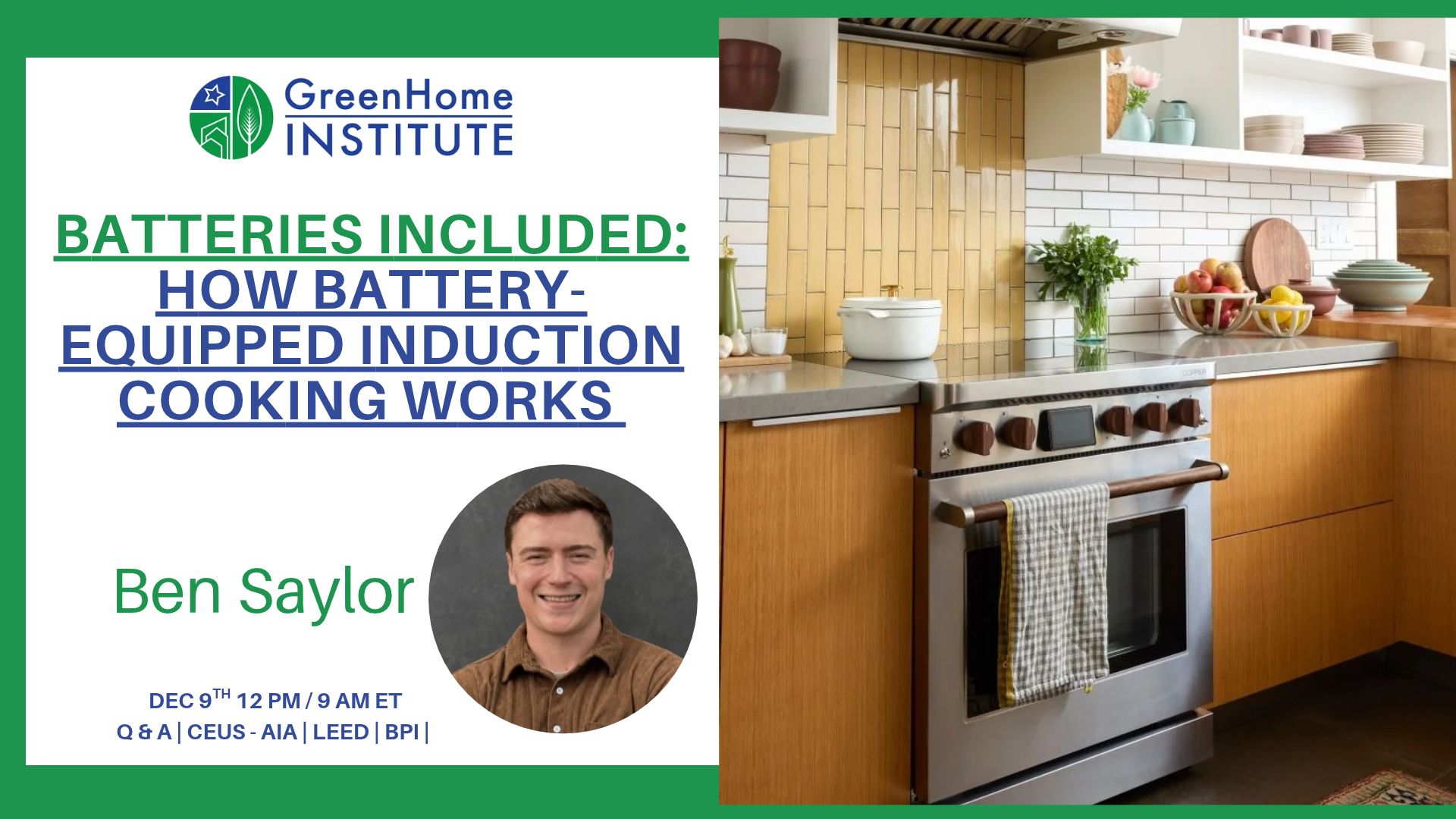
Batteries Included: How Battery-Equipped Induction Cooking Works - Free CEU Webinar
Induction cooking is one of the most requested upgrades in home electrification — and one of the most frequently value-engineered out — because a conventional induction range requires a 240V/40–50A circuit that many homes can't spare without a panel or service upgrade. Battery-equipped induction changes that math. By pairing induction cooktops and electric ovens with an onboard battery, these ranges draw power from an ordinary 120V outlet, store it, and discharge it during cooking to deliver full cooking performance without adding to grid stress or homeowners’ electrical loads. This session gives designers, contractors, builders, and those looking to electrify their homes a working fluency in the technology: how the battery powers the range, why induction's electromagnetic heating is both safer and more efficient than gas or resistive coil, and what happens when the range is unplugged — including how a fully charged battery can cook on the order of three to five meals for a family of four, keeping kitchens running through outages. We'll cover load calculations, installation and siting considerations, indoor air quality benefits of removing combustion from the kitchen, and how to answer the questions homeowners actually ask